Recent California Decision Addresses Whether Directors And Officers Can Be Liable For Unpaid Wages Of A Bankrupt Company

When insolvent companies are unable to make payroll or to pay accrued vacation or other amounts owed employees, the question often arises whether directors, officers, or shareholders face personal liability for these unpaid amounts. The California Court of Appeal recently addressed that issue, examining whether particular sections of the California Labor Code, as well as section 17200 of the Business and Professions Code (California's unfair competition law), impose personal liability.

The Court of Appeal Decision. In its April 2008 decision in Bradstreet v. Wong, the Court of Appeal for the First Appellate District held that owners, officers, and managers of an insolvent company, which later filed bankruptcy, were not personally liable for unpaid wages, overtime, vacation pay, and other amounts based on a series of alleged California Labor Code violations. The Court also ruled that these individuals were not liable to pay restitution under Business and Professions Code section 17200. A copy of the Court of Appeal's opinion is available here.

Risks Remain. Although the decision is a favorable one for officers and directors, risks remain. Be sure to read the informative discussion written by my colleagues in the Employment & Labor Group at Cooley Godward Kronish LLP for a careful analysis of the decision. As they explain, despite this new decision, and the California Supreme Court's 2005 decision on similar issues in the Reynolds v. Bement case, it's possible that directors and officers may still face a risk of individual liability under other California Labor Code sections or based on different legal theories. Depending on the facts and statutes involved, there may also be individual liability under federal law or the laws of other states.

Get Advice. The issues presented when an insolvent company is, or might be, unable to pay wages are complicated. Directors and officers of a company facing this situation should be sure to get both insolvency and employment law advice to help guide them, and the company, through these difficult straits.

Supreme Court Decision Settles The Section 1146(a) Transfer Tax Exemption Issue

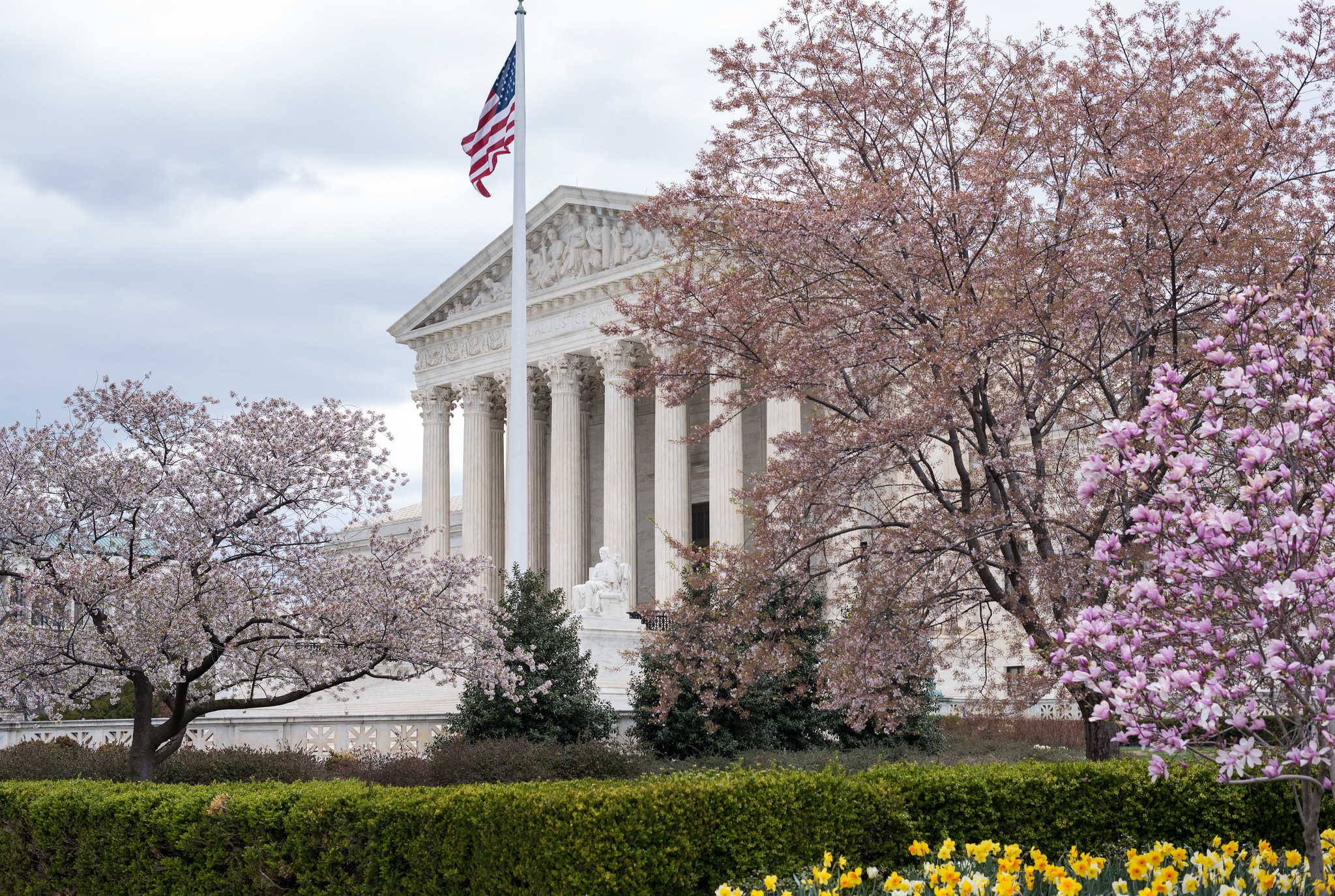
On June 16, 2008, the United States Supreme Court issued its decision in Florida Dept. of Revenue v. Piccadilly Cafeterias, Inc., the case involving whether Section 1146(a) of the Bankruptcy Code, which exempts from stamp or similar taxes any asset transfer “under a plan confirmed under section 1129 of the Code,” applies to transfers of assets occurring prior to the actual confirmation of such a plan. The issue has taken on added importance in recent years because so many sales of assets in Chapter 11 bankruptcy cases -- including the one in the Piccadilly case -- are made through Section 363, well before any plan of reorganization is confirmed.

(For more background on the issue, and the oral argument before the Supreme Court last March, you can read a prior post entitled "What Happened At the Supreme Court Oral Argument In The Section 1146(a) Transfer Tax Exemption Case?")

The Supreme Court's Holding. In a 7-2 decision written by Justice Clarence Thomas, the Supreme Court held that Section 1146(a) applies only to post-confirmation transfers made under the authority of a confirmed plan of reorganization. Follow the link for a copy of the Supreme Court's decision. The Court reversed the Eleventh Circuit (opinion below available here), which unlike the Third and Fourth Circuits, had held that pre-confirmation transfers could also be covered by the exemption. The Supreme Court summed up its holding as follows:

The most natural reading of §1146(a)’s text, the provision’s placement within the Code, and applicable substantive canons all lead to the same conclusion: Section 1146(a) affords a stamp-tax exemption only to transfers made pursuant to a Chapter 11 plan that has been confirmed. Because Piccadilly transferred its assets before its Chapter 11 plan was confirmed by the Bankruptcy Court, it may not rely on §1146(a) to avoid Florida’s stamp taxes. Accordingly, we reverse the judgment below and remand the case for further proceedings consistent with this opinion.

Keys To The Decision. In examining the statute and the parties' arguments, the Supreme Court found Florida's reading of the statute far more reasonable:

While both sides present credible interpretations of §1146(a), Florida has the better one. To be sure, Congress could have used more precise language—i.e., “under a plan that has been confirmed”—and thus removed all ambiguity. But the two readings of the language that Congress chose are not equally plausible: Of the two, Florida’s is clearly the more natural. The interpretation advanced by Piccadilly and adopted by the Eleventh Circuit—that there must be “some nexus between the pre-confirmation transfer and the confirmed plan” for §1146(a) to apply, 484 F. 3d, at 1304—places greater strain on the statutory text than the simpler construction advanced by Florida and adopted by the Third and Fourth Circuit.

Later, the Court added the following:

Even if we were to adopt Piccadilly’s broad definition of “under,” its interpretation of the statute faces  other obstacles. The asset transfer here can hardly be said to have been consummated “in accordance with” any confirmed plan because, as of the closing date, Piccadilly had not even submitted its plan to the Bankruptcy Court for confirmation. Piccadilly’s asset sale was thus not conducted “in accordance with” any plan confirmed under Chapter 11. Rather, it was conducted “in accordance with” the procedures set forth in Chapter 3—specifically, §363(b)(1). To read the statute as Piccadilly proposes would make §1146(a)’s exemption turn on whether a debtor-in-possession’s actions are consistent with a legal instrument that does not exist—and indeed may not even be conceived of—at the time of the sale. Reading §1146(a) in context with other relevant Code provisions, we find nothing justifying such a curious interpretation of what is a straightforward exemption.

In dismissing another of Piccadilly's arguments, the Court had occasion to make an interesting comparison between the mechanics of assumption and rejection of executory contracts and the timing of a transfer for Section 1146(a) purposes:

We agree with Bildisco’s commonsense observation that the decision whether to reject a contract or lease must be made before confirmation. But that in no way undermines the fact that the rejection takes effect upon or after confirmation of the Chapter 11 plan (or before confirmation if  pursuant to §365(d)(2)). In the context of §1146(a), the decision whether to transfer a given asset “under a plan confirmed” must be made prior to submitting the Chapter 11 plan to the bankruptcy court, but the transfer itself cannot be “under a plan confirmed” until the court confirms the plan in question. Only at that point does the transfer become eligible for the stamp-tax exemption.

The Court also found that the placement of Section 1146(a) in a subchapter entitled "POSTCONFIMRATION MATTERS" was yet another factor which, while not decisive, helped to undermine Piccadilly's arguments.

Canon Fodder. The Court next held that even if the statute were ambiguous, which the Court did not expressly decide, two canons of statutory interpretation would compel a decision in favor of Florida's reading of the statute.

  • First, changes were made to Section 1146 as recently as the 2005 amendments to the Bankruptcy Code, and Congress is generally presumed to be aware of judicial interpretations of a statute (here decisions from the Third and Fourth Circuits refusing to apply the exemption to pre-confirmation transfers, both of which predated the Eleventh Circuit's 2007 decision in Piccadilly) when the statute was revised.
  • Second, a federalism canon directs courts to proceed carefully before recognizing an exemption from state taxation that Congress has not clearly expressed. Given Piccadilly's arguments that the statute was ambiguous, the Court found this canon to be "decisive in this case."
  • The Court rejected the canons advanced by Piccadilly, most notably viewing Chapter 11 (and Section 1146) as a remedial statute to be liberally construed to facilitate reorganizations.

The Dissent. Justice Stephen G. Breyer, in a dissent joined by Justice Stevens, focused on "whether the time of the transfer matters." Finding the language of the statute ambiguous, he looked to the policy Congress was trying to implement with the statute. He concluded that Congress would not have "insisted upon temporal limits" in Section 1146(a) since, in his view, "it makes no difference whether a transfer takes place before or after the plan is confirmed."

Other Bloggers Weigh In. For an excellent and entertaining review of the decision, be sure to read Steve Jakubowski's post on his Bankruptcy Litigation Blog. Hat tip as well to the SCOTUS Blog for first reporting on the decision (and updating its excellent wiki on the case) and to the Delaware Business Bankruptcy Report for its post as well.

Minor Impact On Chapter 11 Cases? Of course, the most immediate impact of the decision is that pre-confirmation Section 363 sales will no longer be exempt from stamp or transfer taxes in any circuit, and those taxes will have to be paid.  What remains to be seen is whether sales will be delayed until plan confirmation in order to take advantage of the Section 1146(a) exemption. Given how many asset sales in Chapter 11 cases these days are conducted at the early stages of a case because of financing limitations and declining asset values, a move to delay those sales until plan confirmation seems unlikely. With an economic downturn upon us, the pressures that have led to the expanded use of Section 363 are not likely to abate, regardless of how attractive a stamp or transfer tax exemption may be.

Latest Edition Of Bankruptcy Resource Now Available

The Spring 2008 edition of the Absolute Priority newsletter, published by the Cooley Godward Kronish LLP Bankruptcy & Restructuring group, of which I am a member, has just been released. The newsletter give updates on current developments in bankruptcies and workouts with the goal of keeping you "ahead of the curve" on these issues. Follow the links in this sentence to access a copy of the newsletter or to register to receive future editions.

The latest edition covers a range of cutting edge topics, including:

  • The ability of unsecured creditors to recover post-petition attorney's fees;
  • Key issues when selling claims in bankruptcy;
  • Jury trials and proofs of claim;
  • Assignments for the benefit of creditors; and
  • The impact of post-petition performance on executory contracts.

We have also included information on some of our recent representations of official committees of unsecured creditors in Chapter 11 bankruptcy cases, and unofficial committees in out-of-court workouts, involving major retailers. These include Sharper Image, Lillian Vernon, CompUSA, Wickes Furniture, and The Bombay Company, among others. In addition, a note from my partner Adam Rogoff, the editor of Absolute Priority, discusses the increasing number of bankruptcy filings nationwide and our representation of Bayonne Medical Center in its Chapter 11 reorganization.

I hope you find this latest edition of Absolute Priority to be a helpful resource.

New Article Examines Whether Wire Transfers Can Immunize Payments To Shareholders In LBOs

Leveraged buyouts, known as LBOs, have frequently been the subject of fraudulent transfer challenges when the target company later files bankruptcy. As its name implies, the classic LBO involves the use of leverage -- debt -- to finance the acquisition of the target company's stock. Often that new debt is secured by the assets of the target company. This post highlights a new article that addresses one of the hot issues in LBO fraudulent transfer litigation, but before doing that it may help to give some context to the discussion.

What Is A Fraudulent Transfer? There are two types of fraudulent transfers. The first is a transfer made with an actual intent to hinder, defraud, or delay creditors. However, transfers may be considered fraudulent, even in the absence of actual fraud, if the transfer has a similar effect on creditors. This second type of fraudulent transfer involves what is known as "constructive fraud." A court may find that a transfer involves constructive fraud if a company, at a time when it is already financially impaired or is made so by the transaction itself, does not receive "reasonably equivalent value" in return for the transfer in question. Section 548, the Bankruptcy Code's fraudulent transfer statute, and state fraudulent transfer laws, cover both actual and constructive fraudulent transfers.

The LBO Fraudulent Transfer Lawsuit. When an LBO is followed sometime later by a bankruptcy, a fraudulent transfer lawsuit may be filed to challenge the LBO itself. Although actual fraud may be asserted, more often the case involves a constructive fraud claim.

  • The argument usually made is that the use of the target company's assets to secure loans (the leverage), the proceeds of which were then paid to selling shareholders (the buyout), rendered the company insolvent, made it otherwise unable to pay its debts when they became due, or left it with an unreasonably small capital with which to conduct its business. Since the target company does not receive anything in exchange for the payment to the selling shareholders, the lack of reasonably equivalent value element is usually present.
  • The plaintiff in a fraudulent transfer lawsuit may be the company itself as Chapter 11 debtor in possession, the official committee of unsecured creditors, or a bankruptcy trustee or post-confirmation plan trustee.
  • The defendants may include the new shareholders, the lenders who obtained security interests in the target company's assets, and the shareholders who sold their stock for cash to the acquirer.

The Settlement Payment Defense. When selling shareholders are sued, they often assert a defense based on the "settlement payment" exception to certain fraudulent transfer claims found in Section 546(e) of the Bankruptcy Code. This exception was added to the Bankruptcy Code to prevent disruptions to the functioning of capital markets that might occur if long-settled trades were able to be unraveled by a fraudulent transfer action years down the road. Some courts, interpreting the term "settlement payment" to include payments made from a financial institution, have held that payments to selling shareholders, made by means of wire transfers using a bank or other financial institution, qualify as just such a "settlement payment" protected from avoidance as a fraudulent transfer under Section 546(e). Those courts, in effect, hold that the fact that a bank made wire transfers rendered an otherwise potentially fraudulent transfer immune from challenge.

Two Recent Articles Tackle This Issue. Two articles, including one published last week, take a look at how courts have been addressing the reach of the Section 546(e) defense in the context of these wire transfer payments.

How Far Does The Defense Go? The new article discusses case law from outside of the Third Circuit. In particular, it examines a recent decision from a New York bankruptcy court that rejected the Section 546(e) defense in a situation involving an LBO of a private, rather than publicly traded, target company. The article sums up the differences this way:

The application of the settlement payment defense in the context of an LBO has been far from uniform. While courts in the 3d Circuit have utilized Section 546(e) to shield virtually all LBO payments from avoidance, even in the context of private transactions, a significant number of courts have limited the scope of this safe harbor provision.           

Accordingly, the extent to which wire transfers may insulate LBO payments from attack under fraudulent transfer laws will likely be determined as much by the venue of the bankruptcy proceedings as much as the facts of the transaction at issue.

Worth Reading. Anyone involved in LBOs, including acquirers, target company directors or management, selling shareholders, and of course their professionals, will find these articles very interesting reading.

Free Bankruptcy Research Tool Available Online

Bankruptcy professionals and the public rarely get a chance to read a judge's own research binder. Fortunately, however, Chief Judge Randall J. Newsome of the United States Bankruptcy Court for the Northern District of California has made his very helpful 348-page research binder available on the Court's website. Follow the links in this sentence to access the entire binder in pdf format and this HTML version organized by topic. I've found the binder to be an excellent way to identify leading cases on a particular topic quickly. The pdf version can also be searched using a key word or phrase. 

Updated as of February 8, 2008, and covering cases through Volume 378 of Bankruptcy Reports, the research binder collects a vast range of cases on business bankruptcy and other topics under the Bankruptcy Code and the Federal Rules of Bankruptcy Procedure. Chief Judge Newsome presides in the Northern District of California so the primary focus of the research binder is on Ninth Circuit law, but some out-of-circuit law is listed as well.

Chief Judge Newsome's disclaimer puts this helpful tool's function in perspective:

The following list of cases and supplemental information is presented for informational and educational purposes only. Though it represents the aggregation of 19 years of research, the Court makes no claims as to its current level of accuracy. Some of the cases set forth may very well have been superseded, reversed, or otherwise may no longer be good law. The Court has posted it with the intention to educate and assist those who may find it helpful. Accordingly, users should consider it a first, but by no means final, research tool, and should cite check all cases listed herein for continued viability prior to relying on such cases in practice.

With those caveats in mind, it can be a great place to start when researching bankruptcy law issues in Ninth Circuit.

Northern District of California Bankruptcy Court Local Rule Amendments Take Effect May 1, 2008

As previously reported, in August 2007 the Bankruptcy Court for the Northern District of California proposed amendments to the Bankruptcy Local Rules designed to implement the changes made by the Bankruptcy Abuse Prevention and Consumer Protection Act of 2005 (known as BAPCPA). After taking comments, the final amendments are scheduled to take effect on May 1, 2008.

  • Follow the links for a clean set of the final amended Bankruptcy Local Rules and a redline version showing changes from the current local rules.

Business Bankruptcy Changes. Certain of the amended local rules will affect Chapter 11 corporate bankruptcy cases. These include changes to the rules governing the investment of estate funds, the replacement of a "responsible individual" for a Chapter 11 debtor or debtor in possession, entry of a final decree closing a case, the procedures for bankruptcy appeals, and the general electronic case filing (ECF) procedures. A number of the other revisions are aimed primarily at consumer bankruptcy cases.

Jury Trial Rule Amended. In addition, however, the Bankruptcy Court took this opportunity to modify Bankruptcy Local Rule 9015-2(b), governing jury trials, which the U.S. Court of Appeals for the Ninth Circuit struck down in its September 2007 decision in the In re HealthCentral.com case. An earlier post entitled "Ordinary Course Preference Case Takes Extraordinary Turn: Ninth Circuit Strikes Down Local Bankruptcy Rule On Jury Trials" gives more details on the decision and its impact.

Conclusion. The changes to the Northern District of California Bankruptcy Local Rules may not be as significant for Chapter 11 cases as those recently proposed in the Southern District of New York or adopted in Delaware, but attorneys practicing in the Northern District of California, and businesses with cases or adversary proceedings pending in that court, should be sure to follow them when they take effect on May 1, 2008.

What Happened At The Supreme Court Oral Argument In The Section 1146(a) Bankruptcy Transfer Tax Exemption Case?

On Wednesday, March 26, 2008, the United States Supreme Court heard oral argument in the case of Florida Dept. of Revenue v. Piccadilly Cafeterias, Inc. A link to the transcript of the oral argument can be found below. The case presents the following question:

Whether section 1146(a) of the Bankruptcy Code, which exempts from stamp or similar taxes any asset transfer “under a plan confirmed under section 1129 of the Code,” applies to transfers of assets occurring prior to the actual confirmation of such a plan?

With so many asset transfers in Chapter 11 cases taking place through Section 363 asset sales before plan confirmation, rather than when plans are consummated after confirmation, how the Supreme Court answers the question presented will have a significant impact on the extent to which debtors end up paying stamp and other transfer taxes as a practical matter.

The Eleventh Circuit's Decision And Aftermath. The Supreme Court case results from a decision by the U.S. Court of Appeals for the Eleventh Circuit holding that pre-confirmation sales can be subject to the exemption under Section 1146(a) if followed by plan confirmation later in the case. Use the link in this sentence to read the Eleventh Circuit's decision in Piccadilly.

The Language of Section 1146(a). The one-sentence section, Section 1146(a), was previously numbered Section 1146(c) but its language has not changed. (Many court orders and opinions still use the old designation.) The statute provides as follows:

The issuance, transfer, or exchange of a security, or the making or delivery of an instrument of transfer under a plan confirmed under section 1129 of this title, may not be taxed under any law imposing a stamp tax or similar tax.

As discussed below, much of the dispute over the scope of this exemption is based on interpretation of the phrase "under a plan confirmed."

Section 363 Sales And Transfer Taxes. As bankruptcy professionals know, Section 363 asset sales often precede confirmation of a plan by months. When confirmed, the plan may simply distribute the cash generated from prior sales of the debtor's assets or may enable a reorganized but smaller debtor to emerge from bankruptcy. Courts around the country have taken very different views on whether Section 1146(a)'s exemption should apply to these pre-confirmation transfers.

Some courts will include findings in Section 363 sale orders that the sale, even though prior to plan confirmation, is exempt from stamp and similar taxes. This sale order from the Southern District of New York illustrates that approach:

The sale of the Purchased Assets . . . is a prerequisite to the Debtors’ ability to confirm and consummate a plan or plans. The Sale Transaction is therefore an integral part of a plan or plans to be confirmed in the Debtors’ cases and, thereby, constitutes a transfer pursuant to section 1146(c) of the Bankruptcy Code, which shall not be taxed under any law imposing a transfer tax, a stamp tax or any similar tax.

Cases filed in Delaware will likely receive a very different response. In 2003, the Third Circuit in In re Hechinger Inv. Co. of Del., Inc., 335 F.3d 243 (3d Cir. 2003) -- unlike the Eleventh Circuit in Piccadilly -- held that the Section 1146(a) exemption does not apply to pre-confirmation transfers. (The Third Circuit's opinion was authored by then Circuit Judge, and now Associate Justice, Samuel Alito.) Delaware's new local rule governing Section 363 sales requires sale motions to make express disclosure of an effort to obtain such a provision in a sale order:

Tax Exemption. The Sale Motion must highlight any provision seeking to have the sale declared exempt from taxes under section 1146(a) of the Bankruptcy Code, the type of tax (e.g., recording tax, stamp tax, use tax, capital gains tax) for which the exemption is sought. It is not sufficient to refer simply to "transfer" taxes and the state or states in which the affected property is located.

Other courts have taken a similar view. The Section 363 sale guidelines adopted by the Bankruptcy Court for the Northern District of California call out various provisions that the Bankruptcy Court generally will not approve in a sale order, including the following:

Any provision that purports to exempt the transaction from transfer taxes under section 1146(c). By its own terms, that section applies only to a sale pursuant to a plan of reorganization, not a sale outside of a plan under section 363(b).

The Supreme Court Oral Argument And Transcript. Against this background, the Supreme Court heard oral argument in the Piccadilly case on March 26, 2008. A copy of the transcript of the oral argument is available by clicking on the link in this sentence.

It's difficult to tell how the decision will come out based on the questions asked by the various Justices, but the questions are themselves quite interesting. Some focused on why Congress would want to exempt post-confirmation but not pre-confirmation transfers. Others implied that the plain language of the statute limited the reach of the exemption only to transfers made, literally, "under" a confirmed Chapter 11 plan of reorganization. Still others inquired about the administrative impact on states if pre-confirmation transfers were initially exempt but subsequently could be taxed in the event that no plan was ever confirmed. An additional topic raised was whether, if the statute were held to exempt pre-confirmation transfers, the exemption should cover only those transfers "necessary" for a later plan confirmation or also transfers merely "instrumental" to a later plan confirmation. 

The State's Arguments. During the argument, the State of Florida contended that the statute was unambiguous and that the word "under" meant a transfer made at or following confirmation of plan. Arguing for this bright-line rule, the State asserted that if pre-confirmation transfers could also be exempt taxing authorities would not know, at the time a transfer was recorded, whether a Chapter 11 plan would in fact later be confirmed to validate the exemption. From a policy perspective, the State argued that tax exemptions should be narrowly construed, that stamp and other transfer taxes generate millions of dollars in revenues, and that it would be an administrative burden to require states to monitor Chapter 11 cases to see if plans were later confirmed to validate exemptions claimed on earlier asset transfers.

The Debtor's Arguments. The debtor made both policy and statutory interpretation arguments. On the policy side, Piccadilly argued that a debtor cannot get a Chapter 11 plan confirmed without cash, debtors often make Section 363 asset sales to preserve value and raise funds needed to confirm a Chapter 11 plan later in the case, the exemption was designed to save cash for the benefit of creditors, and these pre-confirmation sales should receive the same benefit from the exemption. The debtor also asserted that the key phrase in Section 1146(a), "under a plan confirmed" appears in Section 365(g)(1). Section 365 was interpreted by the Supreme Court in N.L.R.B. v. Bildisco &. Bildisco, 465 U.S. 513 (1984), to require pre-confirmation, not post-confirmation, decisions on executory contracts. The debtor contended that because the phrase "under a plan confirmed" means before confirmation when used in Section 365(g)(1), it must mean before confirmation in Section 1146(a) as well. In contrast, the debtor argued, Congress used the different phrase "confirmed plan" in Sections 1142(b) or 511(b) when it intended to refer to a point after plan confirmation.

Conclusion. Whether Section 1146(a)'s exemption from transfer taxes applies to pre-confirmation transfers has split circuit and bankruptcy courts alike over the years. The questions asked during the Supreme Court's oral argument in the Piccadilly case suggest a similar split among the Justices over how the statute should be interpreted. With the Supreme Court's term ending in the next few months, however, debtors, creditors, and taxing authorities should not have to wait much longer for a definitive answer to this open issue.  

Trademark Licenses In Bankruptcy: New Developments In The N.C.P. Marketing Case

Last November I reported on the status of the Ninth Circuit appeal in In re: N.C.P. Marketing Group, Inc., a case addressing whether a debtor can assume a trademark license over the trademark owner's objection. Back in 2005 the U.S. District Court for the District of Nevada issued its first of a kind decision, In re: N.C.P. Marketing Group, Inc., 337 B.R. 230 (D.Nev. 2005), holding that trademark licenses are personal and nonassignable in bankruptcy absent a provision in the trademark license to the contrary. Click here for a copy of the N.C.P Marketing Group decision and here to read an earlier post on the case.

The N.C.P. Marketing Court's Analysis. In reaching its conclusion, the District Court held that under the Lanham Act, the federal trademark statute, a trademark owner has a right and duty to control the quality of goods sold under the mark:

Because the owner of the trademark has an interest in the party to whom the trademark is assigned so that it can maintain the good will, quality, and value of its products and thereby its trademark, trademark rights are personal to the assignee and not freely assignable to a third party.  

The trademark owner in that case, Billy Blanks of the Billy Blanks® Tae Bo® fitness program, successfully moved the court to compel rejection of the trademark license because under the "hypothetical test" analysis of Section 365(c)(1) of the Bankruptcy Code adopted by the U.S. Court of Appeals for the Ninth Circuit, contracts that cannot be assigned by the debtor without the nondebtor party's consent cannot be assumed by the debtor either. (For a full discussion of these issues, take a look at this earlier post entitled "Assumption of Intellectual Property Licenses In Bankruptcy: Are Recent Cases Tilting Toward Debtors?")  

The Ninth Circuit Appeal. N.C.P. Marketing appealed the decision to the Ninth Circuit, the appeal was fully briefed, and oral argument had been scheduled for November 5, 2007. Prior to the oral argument, the Chapter 7 trustee for N.C.P. Marketing reached a settlement in the case. At the trustee's request, the Ninth Circuit took the oral argument off calendar and directed the parties to move to dismiss the appeal if the settlement was approved by the Bankruptcy Court. At the time, I commented that it appeared that no Ninth Circuit decision would be issued in the case due to the settlement.

The Settlement Is Rejected. Back in the Bankruptcy Court, the Chapter 7 trustee filed a motion for approval of the settlement, but N.C.P. Marketing and certain other parties filed an objection and offered a competing bid for the appeal rights. In something of a surprise, on February 28, 2008, the Bankruptcy Court issued a brief order denying the trustee's motion for approval of the settlement and instead approved a sale of the appeal rights and certain other assets to the objecting parties. The objecting parties thereafter posted the undertaking required by the Bankruptcy Court's order.

Appeal May Go Forward. As a result, the Ninth Circuit appeal may be revived, although no new oral argument has been scheduled yet. Barring further developments, trademark licensors and licensees may end up seeing a Ninth Circuit decision after all on the important issue of whether trademark licenses can be assumed in bankruptcy. Stay tuned.


Southern District Of New York Bankruptcy Court Proposes Amendments To Local Rules

The United States Bankruptcy Court for the Southern District of New York has announced proposed changes to its Local Bankruptcy Rules in light of the recent amendments to the Federal Rules of Bankruptcy Procedure that took effect on December 1, 2007. Many of the largest business bankruptcy cases are filed in the Southern District of New York, which includes Manhattan, making these proposed amendments to the Local Bankruptcy Rules of particular interest.

Cash Collateral And DIP Financing Disclosures. The most significant proposed changes for Chapter 11 bankruptcy cases address cash collateral and DIP financing motions and, if adopted, the local rule amendments would supplement the disclosures required by amended Federal Rule of Bankruptcy Procedure 4001. Proposed Local Bankruptcy Rule 4001-2 would require at least fifteen material provisions to be disclosed in cash collateral and DIP financing motions. These include the following:

  • the amount of cash to be used or borrowed, including any borrowing base formula and availability;
  • material conditions to closing, including budget provisions;
  • pricing and economic terms, including various fees;
  • any effect on existing liens;
  • any carve-outs from liens or superpriorities;
  • any cross-collateralization;
  • any roll-up provisions;
  • any provisions that would materially limit the Court's power or discretion or the fiduciary duties of a trustee, debtor in possession, or committee;
  • any limitation on the lender's obligation to fund activities of a trustee, debtor in possession, or committee;
  • termination or default provisions;
  • any change of control provisions;
  • any deadline for sale of property;
  • any prepayment penalty or other restriction on repayment;
  • terms governing joint liability of debtors; and
  • any funding of non-debtor affiliates.

Additional Proposed Financing Changes. Other provisions would require (1) disclosure regarding efforts to obtain financing, (2) adequate notice after an event of default and before a lender could exercise remedies, (3) disclosure regarding carve-outs and allocations of carve-outs, (4) investigation periods for committees, and (5) appearances at preliminary and final hearings. In addition, the proposed local rule would mandate certain provisions in proposed orders, including a reservation of the Court's right to unwind roll-ups if a successful challenge is later made. 

Other Proposed Amendments. The remaining proposed amendments are mainly technical. They would repeal local rules that have become unnecessary, drop the requirement that attorneys use an identifier that includes the last four digits of their social security number, conform attorney signature rules to current practice, and dispense with the need for a separate memorandum of law if a discussion of the law is included in the motion itself.

Opportunity For Comments. The Bankruptcy Court has not yet promulgated these local rule amendments and it is accepting comments on the proposed changes until April 23, 2008. Information on how to submit comments is available on the Court's website at the Local Rule page.

Bankruptcy Rule Amendments: New Article Reviews The Important Changes

An article my partner Adam Rogoff, associate Seth Van Aalten, and I wrote was recently published in the January 2008 issue of Pratt's Journal of Bankruptcy Law. The article discusses the significant amendments to the Federal Rules of Bankruptcy Procedure that took effect on December 1, 2007. Those amendments covered a range of procedures from omnibus claims objections to motions to assume executory contracts and real property leases to "first day" motions in Chapter 11 cases. 

If you don't have a copy of the Journal, you can read the article, entitled "Important Changes To Bankruptcy Rules Take Effect," by clicking on its title in this sentence. For more details on the rule changes, use the links that follow for a copy of the full, "clean" set of rule amendments as well as the redline set showing changes made by the amendments to the existing rules, together with the Advisory Committee's comments.

Real Estate Workouts: Are Pre-Bankruptcy Waivers Of The Automatic Stay Enforceable?

This post examines a new decision from the Bankruptcy Court for the Southern District of Florida involving the enforceability of a pre-bankruptcy waiver of the automatic stay. Let's first set the stage by taking a look at a not so uncommon fact pattern involving a real estate project in financial trouble.

The Real Estate Workout: Forbearance With A Price. The owner of a troubled real estate development is about to default on a loan secured by the real property. On the eve of foreclosure, the lender agrees to forbear from foreclosing for two months to give the developer time to refinance and save the project.  However, in exchange the lender insists that the developer agree that, in the event of bankruptcy, the lender would have relief from the automatic stay to foreclose. The developer agrees and the forbearance agreement is executed.

The Bankruptcy Aftermath. Unfortunately, the hoped-for financing falls through and the developer files a Chapter 11 bankruptcy for the project just before the rescheduled foreclosure sale. The lender quickly files a motion for relief from stay, asking the bankruptcy court to enforce the pre-bankruptcy relief from stay waiver included in the forbearance agreement. The motion is opposed by the developer, now a Chapter 11 debtor in possession, as well as the official committee of unsecured creditors and junior lienholders.

Is The Waiver Of The Automatic Stay Enforceable? This was the question answered by Bankruptcy Judge John K. Olson in an 18-page decision, issued on February 12, 2008, in the In re Bryan Road, LLC Chapter 11 bankruptcy case. The facts were essentially as described above, but a few additional details help put the issue in context.

  • The real estate project involved a 210 unit "dry stack" boat storage facility in Dania Beach, Florida.
  • The lender, which commenced a judicial foreclosure proceeding against the 191 units still owned by the debtor, had been awarded final judgment setting a foreclosure sale.
  • On the morning of the foreclosure sale, the debtor and the lender entered into a forbearance agreement that was approved by the court in the foreclosure proceeding. The forbearance agreement provided for a two-month continuance of the foreclosure sale in exchange for the debtor's agreement that the lender would have relief from the automatic stay to foreclose in the event of a bankruptcy.
  • The day before the continued foreclosure sale was to take place, the debtor filed its bankruptcy petition.

The Bankruptcy Court's Analysis. In his decision on the lender's stay relief motion, Judge Olson first noted that prepetition waivers of the stay will be given "no particular effect as part of initial loan documents" but the "greatest effect if entered into during the course of prior (and subsequently aborted) chapter 11 proceedings." After concluding that a confirmed chapter 11 plan was not required, the Bankruptcy Court looked to four non-exclusive factors, drawn from In re Desai, 282 B.R. 527 (Bankr. S.D. Ga. 2002), in considering whether stay relief should be granted based on the prepetition waiver:

(1) the sophistication of the party making the waiver; (2) the consideration for the waiver, including the creditor's risk and the length of time the waiver covers; (3) whether other parties are affected including unsecured creditors and junior lienholders; and (4) the feasibility of the debtor's plan.

As to the first two factors, the Bankruptcy Court found that the debtor's counsel was very sophisticated and, although the forbearance period was short, it was sufficient consideration. On the third and fourth factors, the Bankruptcy Court first noted the existence of junior lienholders and approximately $1 million of disputed unsecured claims. However, the Bankruptcy Court then engaged in a detailed analysis leading to the conclusion that the debtor's plan simply was not feasible. As such, there likely was no value for unsecured creditors in the boat storage project beyond the secured debt and the junior lienholders could protect their own interests under state law. Putting these factors together, the Bankruptcy Court concluded that the forbearance agreement -- including the waiver of the automatic stay -- should be enforced and the stay was lifted.

A Few Key Take-Aways. With economic conditions continuing to strain a variety of real estate developments, workouts in the shadow of foreclosure may become more common. The In re Bryan Road, LLC decision highlights that in the right case a bankruptcy court may be willing to enforce prepetition stay relief agreements if a bankruptcy is later filed.

  • This is particularly true when the debtor is a single asset real estate entity, it signs an agreement on the eve of foreclosure, and it has few unsecured creditors. In fact, the more the bankruptcy appears to be just a two-party dispute between the debtor and lender, the more likely the prepetition automatic stay waiver will be enforced.
  • On the other hand, when a troubled real estate project has a real chance of reorganizing, and substantial unsecured creditor claims are involved, these agreements more likely will be rejected in favor of traditional relief from stay analysis under Section 362 of the Bankruptcy Code.

Conclusion. Prepetition stay relief agreements involve complex issues. As with most bankruptcy questions, real estate owners and lenders should get advice from bankruptcy counsel on their specific situation when considering whether to include such a waiver of the automatic stay in any forbearance agreement.

Delaware Bankruptcy Court Adopts New Local Rule For Section 363 Sales

The Delaware Bankruptcy Court has recently adopted amended Local Rules, which became effective on February 1, 2008, and they include meaningful changes to the procedures governing Section 363 sales of assets. New Local Rule 6004-1, entitled "Sale and Sale Procedures Motions," requires additional disclosure and the highlighting of certain key provisions often seen in sale motions.

By following the links in this sentence you can find the redline version and clean version of the new Delaware Bankruptcy Court Local Rules.

The Section 363 Sale. As a reminder, a bankruptcy asset sale often happens in the first few weeks or months of a Chapter 11 case, rather than as part of a plan of reorganization. Frequently this will involve a sale of all or substantially all of a debtor's business as a going concern. The sale is generally referred to as a "Section 363 sale" because Section 363 is the key Bankruptcy Code section that governs a debtor's sale of assets in bankruptcy. The debtor must seek bankruptcy court approval of a sale that is not in the ordinary course of business and of any effort to transfer executory contracts, intellectual property licenses, or commercial real estate leases to the buyer.

Sale Motion Requirements. The new local rule first addresses motions to sell property of the estate. A copy of the proposed or near-final purchase agreement must be attached to the motion, as well as a proposed sale order, and any request for a consumer privacy ombudsman under Section 332 of the Bankruptcy Code must be included. The most interesting changes, however, are in the list of provisions which, if included in the motion or sale order, must be highlighted together with a justification for each such provision. These include the following:

  • Sale to insiders
  • Agreements with management
  • Releases
  • Private sale or no competitive bidding
  • Closing and other deadlines
  • Good faith deposit
  • Interim agreements with proposed buyer
  • Use of sale proceeds
  • Section 1146 tax exemption
  • Retention of records
  • Sale of avoidance actions
  • Successor liability findings requested
  • Sale free and clear of leases or licenses
  • Credit bid
  • Waiver of 10-day stay under Rule 6004(h)

A Few Specifics. To get a sense of the changes made, here's what the amended rule now requires for disclosure of agreements with management included as part of a sale motion:

Agreements with Management. If a proposed buyer has discussed or entered into any agreements with management or key employees regarding compensation or future employment, the Sale Motion must disclose (a) the material terms of any such agreements, and (b) what measures have been taken to ensure the fairness of the sale and the proposed transaction in the light of any such agreements.

Similarly, if a finding is requested regarding a tax exemption under Section 1146(a) of the Bankruptcy Code, the motion must now detail the following:

Tax Exemption. The Sale Motion must highlight any provision seeking to have the sale declared exempt from taxes under section 1146(a) of the Bankruptcy Code, the type of tax (e.g., recording tax, stamp tax, use tax, capital gains tax) for which the exemption is sought. It is not sufficient to refer simply to "transfer" taxes and the state or states in which the affected property is located.

Another part of the new rule requires more disclosure of efforts to sell free and clear of leases and licenses:

Sale Free and Clear of Unexpired Leases. The Sale Motion must highlight any provision by which the debtor seeks to sell property free and clear of a possessory leasehold interest, license or other right.

Sale Procedures Motions. In addition to an actual sale motion, the new local rule includes new provisions addressing motions for approval of sale and auction procedures. Although these provisions are already typically set forth in motions, the rule makes mandatory the highlighting of certain ones, including the following:

  • Financial qualification procedures
  • Deadlines for submitting bids
  • Format of overbids
  • Good faith deposit
  • No-shop or no-solicitation rules
  • Break-up/topping fee and expense reimbursement
  • Bidding increments and use of break-up fees
  • Details of auction procedures

Other Important Local Rule Changes. In addition to a number of minor changes, the amended Local Rules include three significant additions governing (1) discovery motions, (2) service of discovery materials, and perhaps most importantly, (3) electronic or e-discovery. These new rules are found at Local Rules 7026-1, 7026-2, and 7026-3, respectively. Local Rule 3007-1 on omnibus claim objections, discussed in a prior post, has been revised to reflect Delaware's continued adherence to its local practice notwithstanding the recent national rule changes. (Click on the links in this sentence for more on the national rule amendments and Delaware's decision to retain its own omnibus claim objection procedures.) Also of note, amended Local Rule 9010-1 now makes explicit the requirement that associated Delaware counsel file all papers and attend proceedings before the Court.

Conclusion. While many of the amended sale motion rules are not new to Delaware practice, Local Rule 6004-1 will change the way sale and sale procedures motions are prepared going forward. Chapter 11 debtors must comply with the new rule and that should give creditors and potential overbidders an easier time spotting the material provisions in these motions.

Two Ways To Get The Updated Bankruptcy Code Online For Free

Looking for a free, online and updated version of the entire Bankruptcy Code, reflecting the amendments made by the Bankruptcy Abuse Prevention and Consumer Protection Act ("BAPCPA")? Now there are two ways to access it.

These are handy resources for attorneys and others who need to find the up-to-date Bankruptcy Code online.

First Appellate Court Decision Addresses Question Left Open In The Supreme Court's Travelers Opinion: Can Unsecured Creditors Recover Post-Petition Attorney's Fees?

Happy New Year to everyone. I'm back from a holiday blogging break with a report on the first appellate decision to address the question left open in last year's U.S. Supreme Court decision in Travelers Casualty & Surety Co. of America v. Pacific Gas & Electric Co. -- whether post-petition attorney's fees can be added to unsecured claims. Although unrelated, this new decision also tackles the interesting question of whether a guarantor of a debt can become liable if the payment of the debt by the primary obligor later is returned in a preference settlement.

The Travelers Case. As a brief refresher, the U.S. Supreme Court overruled the Ninth Circuit's so-called Fobian rule in the Travelers Casualty & Surety Co. of America v. Pacific Gas & Electric Co. decision (available here) in March 2007. However, it did not decide whether unsecured creditors could recover, as part of their unsecured claims, post-petition attorney's fees incurred during the course of the bankruptcy case. For more on the Travelers decision, you may find this earlier post of interest.

A Developing Split. Since the Travelers decision, two bankruptcy courts issued decisions on the open issue, coming to different conclusions. 

  • In May 2007, in the In re Qmect, Inc. decision (available here), the U.S. Bankruptcy Court for the Northern District of California held that unsecured creditors could recover post-petition attorney's fees. For more on that decision, see this earlier post on the case and its analysis. 
  • In July 2007, in the In re Electric Machinery Enterprises, Inc. case (available here), the U.S. Bankruptcy Court for the Middle District of Florida came to the opposite conclusion, following a majority of courts that had addressed this issue unrestrained by the Ninth Circuit's Fobian decision. See this previous post for more on the Florida decision.
  • Commentators, including with the recent article written by the American Bankruptcy Institute's Scholar in Residence Professor Mark Scarberry, have joined the fray as well.

The SNTL Corp. Ruling. On December 19, 2007, the Ninth Circuit Bankruptcy Appellate Panel ("BAP") issued its decision in the In re SNTL Corp. case (available here). After carefully reviewing both the Qmect and Electric Machinery decisions, as well as pre-Travelers case law, the BAP chose to follow Qmect, holding that "claims for postpetition attorneys' fees cannot be disallowed simply because the claim of the creditor is unsecured." Judge Dennis Montali, writing for the unanimous BAP panel, first explained its analysis of the interplay between Sections 502 and 506(b):

We are not persuaded by the approach of the Electric Machinery court and, like Qmect, we reject the argument that section 506(b) preempts postpetition attorneys’ fees for all except oversecured creditors. While we cannot predict how the Ninth Circuit will decide this issue in Travelers, we do find a clue in Joseph F. Sanson Inv. Co. v. 268 Ltd. (In re 268 Ltd.), 789 F.2d 674, 678 (9th Cir. 1986), where the Ninth Circuit observed that section 506(b) defines secured claims and does not limit unsecured claims:

When read literally, subsection (b) arguably limits the fees available to the oversecured creditor. When read in conjunction with § 506(a), however, it may be understood to define the portion of the fees which shall be afforded secured status. We adopt the latter reading.

268 Ltd., 789 F.2d at 678.

Next, the BAP discussed Section 502(b)(1)'s requirement that the court determine the amount of an unsecured claim as of the petition date: 

The Electric Machinery court, like the bankruptcy court here and many of the pre-Travelers majority courts, disallowed the postpetition fees of an unsecured creditor because section 502(b)(1) provides that a bankruptcy court  “shall determine the amount of such claim . . . as of the date of the filing of the petition” and the postpetition fees did not exist as of that date. Elec. Mach., 371 B.R. at 551; Pride Cos., 285 B.R. at 373. Because the amount of fees incurred postpetition cannot be determined or calculated as of the petition date, section 502(b) purportedly precludes their allowance. Id. We disagree with this approach, as it is inconsistent with the Bankruptcy Code’s broad definition of “claim,” which -- as discussed previously -- includes any right to payment, whether or not that right is contingent and unliquidated. See 11 U.S.C. § 101(5)(A); Qmect, 368 B.R. at 884.

The BAP then held that the Supreme Court's 1988 Timbers decision did not apply:

We believe that Electric Machinery’s reliance on Timbers is misplaced. Timbers provided that an undersecured creditor could not receive postpetition interest on the unsecured portion of its debt. Timbers, 484 U.S. at 380. This holding is consistent with section 502(b)(2), which specifically disallows claims for unmatured interest. Inasmuch  as section 502(b) does not contain a similar prohibition against attorneys’ fees, the comparison between the current issue and that presented in Timbers is not persuasive.

Finally, the BAP held that it was unnecessary to reconcile the competing public policy considerations advanced by the Electric Machinery and Qmect decisions:

Because we find that the Bankruptcy Code itself provides the answer to this issue (by not specifically disallowing postpetition fees), we do not attempt to reconcile these policy concerns. In the end, it is the province of Congress to correct statutory dysfunctions and to resolve difficult policy questions embedded in the statute.

A Ninth Circuit Decision To Come? In the first quote above, you may have picked up the BAP's reference to the Ninth Circuit having this issue before it in the Travelers case. That case, on remand from the Supreme Court, appears to have been fully briefed. Any decision from the Ninth Circuit itself on the issue would, of course, supersede this BAP decision and be controlling authority in the circuit, but it may be months before such a ruling comes down.

A Bonus Issue: Guarantor's Liability Revived After A Preference Settlement. The facts of the SNTL Corp. case are complex, but the key facts are fairly straightforward. In short, one of the debtor's insurance company subsidiaries owed money to the creditor and the debtor guaranteed the debt. Although the subsidiary paid the creditor, the subsidiary was later placed into state insolvency proceedings. The state insurance commissioner sued the creditor for return of the payment on preference grounds. The creditor settled the preference case and returned most of the payment ($110 million of a $163.4 million original payment). The creditor thereafter amended its proof of claim in the debtor's Chapter 11 case, seeking recovery under the guaranty of the returned preference.

  • After first determining that the guaranty's language permitted the creditor to assert a claim to the extent provided by law, the BAP next held, "[w]hile we located no Ninth Circuit or California case precisely on point, we agree that the return of a preferential payment by a creditor generally revives the liability of a guarantor."
  • The BAP cited to various case and restatement authority for the proposition that although a guarantor is discharged on payment of a debt, a preferential payment is deemed to be no payment at all.
  • The BAP also held that repayment of a preference in a settlement, following a preference lawsuit, is not a voluntary payment that would avoid the guarantor's liability.
  • Given the risk of a preference recovery, the creditor's revival claim under the guaranty was a contingent claim as of the petition date and became allowable once the contingency occurred following the petition. As a result, the creditor's claim for the full $110 million of the preference settlement was an allowed claim.

An Important Decision. BAP decisions are not binding precedent in the Ninth Circuit, but this first appellate decision on the open, post-Travelers question may encourage unsecured creditors to include post-petition attorney's fees as part of their allowed unsecured claims when their contracts or a statute provides for them outside of bankruptcy.  We may see creditors begin to include such amounts in unsecured claims at an increasing pace, while we wait for the Ninth Circuit's decision on this issue in the remanded Travelers case. The added bonus of the SNTL Corp. court's guaranty analysis and holding makes this decision an even more interesting, and important, read.

Morgan Stanley Now Predicts A Recession For U.S. Economy

Morgan Stanley has became the first major Wall Street firm to predict that the U.S. economy will fall into recession. In an article entitled "Recession Coming," Morgan Stanley economists Richard Berner and David Greenlaw forecast that the U.S. economy will suffer a mild recession in 2008:

We're changing our calls for US growth and monetary policy.  Since the shock of tighter financial conditions surfaced in August, we've incrementally reduced our outlook for future growth.  But the time for incremental changes is over.  A mild recession is now likely: We expect domestic demand to contract by an average 1% annualized in each of the next three quarters, no growth in overall GDP for the year ending in the third quarter of 2008 and corporate earnings to contract by 5-10% over that longer period.  Three factors have tipped the balance to the downside: Financial conditions continue to tighten, domestic economic weakness is broadening into capital spending, and global growth — for us, long the key bulwark against a downturn — is slowing. 

Berner and Greenlaw likewise see the potential for a "perfect storm" for consumers brought on by the continuing housing downturn (they predict a 10% decline in home prices next year), a weakening job market, and higher energy and food costs. To avoid an even sharper downturn, they expect the Federal Reserve to cut interest rates by 100 basis points over the next seven to nine months, moves they believe will help keep the recession short and mild.

To date, most Wall Street economists have stopped short of predicting a recession. If the Morgan Stanley forecast comes true, it would almost certainly accelerate the predicted rise in corporate debt defaults, especially on high-yield debt. That would very likely bring about an even bigger increase in Chapter 11 bankruptcy filings than has already been predicted

Delaware Bankruptcy Court Opts Out Of Newly Amended Rule 3007's Procedures For Omnibus Claim Objections

As described in a post earlier this week, one of the major changes made by the new amendments to the Federal Rules of Bankruptcy Procedure that took effect on December 1, 2007 was the inclusion of limits on the use of omnibus claim objections. Newly revised Rule 3007 restricts omnibus objections to certain situations and imposes formatting standards on the motions that can be filed. 

When describing the amended rule, I commented that the Delaware Bankruptcy Court, through Local Rule 3007-1, has had its own omnibus objection procedures for some time and that they seemed to be in conflict with the new national rule. Well, taking advantage of the "unless otherwise ordered by the court" language in amended Rule 3007(c), Chief Judge Mary F. Walrath of the Delaware Bankruptcy Court issued this General Order noting the conflict but directing that the amended Rule 3007(c) "shall not be applicable to omnibus objections that are filed in accordance with Local Rule 3007-1." As a result, barring an individual judge choosing to apply the national Rule 3007 procedure in a particular situation, omnibus objections in Delaware cases will continue to be governed by Delaware's own local procedures.

Special thanks to Chuck Kunz of MorrisJames, publishers of the Delaware Business Bankruptcy Report, for alerting me to Delaware's new General Order.

Don't Miss The Important Business Bankruptcy Rule Amendments That Just Took Effect

On December 1st of almost every year, amendments to the Federal Rules of Bankruptcy Procedure -- the ones that govern how bankruptcy cases are managed -- take effect to address issues identified by an Advisory Committee made up of federal judges, bankruptcy attorneys, and others. Often the changes are relatively minor and of interest only to bankruptcy practitioners, but this year's set has made some significant changes that will directly impact debtors, creditors and other stakeholders.

A Look At The Amendments. You may find it interesting to see the entire group of amendments together, so I have included two links. The first is to the full "clean" set of the amended rules. The second is to a redline showing the changes made by these amendments to the existing rules, together with the Advisory Committee's comments.

The Omnibus Objection Problem. One of the most significant amendments will make changes to the popular practice of filing omnibus objections. In large cases the debtor or other estate representative has so many claims to address that they have combined objections to dozens -- sometimes hundreds -- of different claims in one single motion. The objection may have a name such as “Debtors' Fourteenth Omnibus Objections To Claims (Substantive)” or some similarly titled document. Click here for one example. In a post last year called "Objections To Claims: Ignore Them At Your Peril," I discussed how it can be hard to tell which claims an omnibus objection is targeting.

  • The format has often meant that the only reference to an individual creditor is buried within the objection’s many pages of text and exhibits, typically in an attached list or chart.
  • If the creditor doesn't respond to the objection timely, its claim will likely be disallowed and it will recover absolutely nothing from the bankruptcy estate.

The Amended Rule 3007: An "Anti-Gotcha" Solution. The new rules restrict the use of omnibus objections to certain limited circumstances and impose formatting standards. Otherwise, each claim will require its own separate claim objection unless the combined objection covers claims filed by the same person or entity. What grounds for objection can be made by an omnibus objection under the newly revised Rule 3007?

  • Duplicate claims;
  • Claims filed in the wrong case;
  • Original claims that were amended by later claims;
  • Claims that were not timely filed;
  • Claims that have already been paid or released;
  • Claims filed in a form that does not comply with applicable rules;
  • Claims that are really asserting an equity interest in the debtor; and
  • Priority claims that assert an amount in excess of the maximum amount in the Bankruptcy Code.

In short, if the claim is being challenged on substantive grounds, rather than more technical or procedural ones, then the objection will have to be filed one claimant at a time.

When an omnibus objection does make the permitted objections, it will now have to list claimants in alphabetical order, cross-reference claim numbers, give the ground for the objection and cross-reference that to the text of the objection, describe the objector and the reason for the objection in the document's title, and combine no more than 100 claims in a single objection. This is all designed to make it easier for the creditor to figure out whether its claim is included and the basis for the objection.

Amended Rule 4001: The Clearer Disclosure Rules. Changes have been made to the rule that governs motions and stipulations for use of cash collateral and obtaining debtor in possession (DIP) financing. The amended rules now require that more details about the key provisions of cash collateral and DIP financing terms and conditions be stated in the motion, that proposed forms of order be filed with the motion, and that cross-references be made in the motion to where in the cash collateral or DIP financing agreements and proposed orders the key provisions are reflected. Since some financing agreements can run hundreds of pages long, with complex formulas and provisions, this rule change is designed to make it easier for the court and the parties to understand their material features without wading through the entire document.

New Rule 6003: Putting The Breaks On Some "First Day" Orders. Another major change is the addition of Rule 6003. This new rule provides that "except and to the extent that relief is necessary to avoid immediate and irreparable harm, the court shall not, within 20 days after the filing of the petition, grant relief" regarding three key areas:

  • The employment of professionals;
  • A motion to pay any prepetition claims (read: critical vendors) or to use, sell, lease (Section 363 sales), or incur an obligation for property of the estate, other than cash collateral or DIP financing motions; or
  • Assumption or assignment of any executory contract or unexpired lease (including commercial real estate leases).

As drafted, unless there is an emergency, and then only to the extent it's really necessary, the bankruptcy court should defer these decisions until after the 20th day following the filing of the Chapter 11 bankruptcy petition (although technically these apply under the other chapters of bankruptcy). One reason for the rule is to give time for a creditors committee to be appointed and retain counsel before important decisions are made. That said, the exceptions for cash collateral and DIP financing, as well as for rejection of leases and other executory contracts, means a lot can still be done during the early part of a case. When Section 363 sale or critical vendor motions come up on an emergency basis, it'll be interesting to see how often courts, in applying this new rule, find the existence of irreparable harm.

Amended Rule 6006: Assumption, Assignment, And Rejection Of Executory Contracts. Similar to Rule 3007, Rule 6006 has been changed to put limits on when omnibus motions can be used to deal with executory contracts and leases. Under new Rule 6006(e), absent special court authorization, omnibus motions may be used for multiple executory contracts or leases only when all of the executory contracts to be assumed or assigned are (1) between the same parties, or (2) being assigned to the same assignee. This latter provision likely covers most Section 363 asset sales, so non-debtor contracting parties should continue to carefully review those motions, as discussed in this earlier post. An omnibus motion may also be used when a debtor or trustee seeks to assume, but not assign to more than one assignee, real property leases. In addition, omnibus motions may be used to request rejection of multiple executory contracts or leases.

New Rule 6006(f) provides that, when allowed, these omnibus motions can list no more than 100 executory contracts or leases in any one motion (unlike the chart on this fairly typical pre-amendment motion), and multiple motions will need to be numbered consecutively. The new rule also requires that permitted omnibus motions provide a variety of new information, including:

  • An alphabetical listing by party name;
  • The terms of the assumption or assignment, including for curing defaults; and
  • The identity of the assignee and the adequate assurance of future performance to be provided.

A Few Other Changes. The other amendments this year (1) permit a court to consider a change of venue, (2) clarify when corporate ownership disclosure needs to be made, (3) address constitutional challenges to statutes, and (4) specify procedures for protecting social security numbers and other private information in court filings. Check the clean or redline sets linked above to read these additional rule amendments.

Conclusion. This year's amendments to the Federal Rules of Bankruptcy Procedure have more than their share of real changes and they will have an impact on business bankruptcy cases. The omnibus motion changes should help creditors from missing when their claim is the target of an objection and contract parties from failing to see that their executory contract or lease is part of a motion to assume and assign. Although cash collateral and DIP financing motions are not affected, the new irreparable harm standard for certain relief in the first 20 days of a case may prove interesting when emergency Section 363 sales are attempted. Stay tuned.